
City Club speech... 'It’s as if the 1 percent isn’t satisfied with having most of it. It seems they want it all...'
[Editor's Note: The following is the complete text of the prepared speech "It's About The Money" delivered by Chicago Teachers Union President Karen Lewis to the City Club of Chicago on May 5, 2014. A video of the complete 40-minute speech is available on the CTU website as the "Featured Video" of the day at http://www.ctunet.com. For those who are teaching students how to learn from so-called "informational texts", a good exercise might be to contrast the actual content of Lewis's speech with the manner in which the speech was covered by the Chicago Sun-Times, Chicago Tribune, and Crain's Chicago Business].
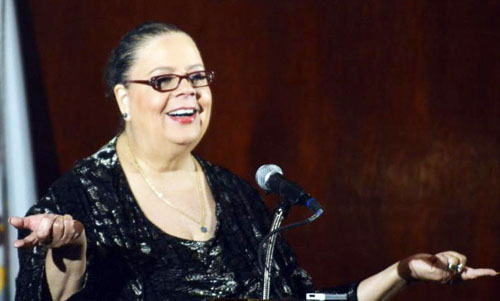 Chicago Teachers Union President Karen Lewis speaking at the City Club on May 5, 2014.KAREN LEWIS PUBLIC ADDRESS: IT’S ABOUT THE MONEY. CITY CLUB CHICAGO
Monday, May 5, 2014
On behalf of the members and staff of the Chicago Teachers Union, I want to thank you for inviting me to the City Club again. I am always honored and pleased to stand before you.
One of my fondest memories of growing up in Chicago was when I was about seven years and my father would take me out on Saturdays for a ride around the city in his old Plymouth. I smiled as Lake Michigan whizzed by my window and I thought its waters flowed from the most striking ocean in the world. I marveled at the skyscrapers and imagined them as the real monsters of the midway; ones that came alive at night to play football in the middle of Soldier’s Field.
I remember one time, however, as we were blazing down 63rd Street with the EL screeching on the tracks overhead, when my father became distracted for just a second and nearly hit a panhandler standing too far in the street. My father, ever the teacher, grumbled something under his breath about people needing to keep their focus—though I don’t think he was judging the man at all. He then he went on to talk about what it meant to be “in poverty” versus what it meant to be “poor.” I’m not sure what it was about that man or that incident, but it seemed to me that my father was talking more to himself than me—or maybe he was just thinking aloud. But, I can still remember what he said to me:
“Never lose your focus Karen; there’s a reason your eyes are in the front of your head,” my father said. “Poverty is an economic condition—something created by social and political systems--but being poor is a psychological condition, and it’s created by hopelessness and despair. You can have all the money in the world and be a poor and sorry soul. You can have very little and be rich in character, rich in spirit. Never let them break you down,” he said, not saying to whom he was referring. “Education is the answer, you hear me Karen? You get an education, you maintain your dignity and then you fight like hell to never let anyone take it from you. You get an education and you’ll never let anyone take from you what’s rightfully yours, you hear me? Someone wants to put you in poverty; you better fight like hell, ‘lest you find yourself lost, broken, and poor. You be smart. You keep your focus.”
Later that night, after dinner and my mother tucked me into bed with promises of sweet dreams (unlike my father who had scared me to death); I thought the things my father said on the way home. I think I vowed right then, that night that I would let anyone send me into poverty. That if someone wanted to take something from me or do something to me that I did not ask for that I stand up for myself, that I would fight like hell—just like my father said.
I am reminded of this story because this is where I find myself right now: focused and fighting like hell for the 30,000 educators who elected, Jesse, Michael, Kristine and me to our office. Our members don’t want to wind up in poverty because somebody who just rode into town wants to take away their livelihoods. It’s as if the 1 percent isn’t satisfied with having most of it. It seems they want it all.
And, they justify their behavior by determining among themselves “who is worthy” and who isn’t. They do stuff like determine which children receive another brand new, unsolicited, selective enrollment high school in their neighborhood and which children have 49 schools in their communities wiped off the face of the map. They develop social identifiers to determine who amongst us are “strivers” and who amongst us are in the 25 percent who will “never amount to anything, or be anything” and therefore aren’t worthy of investment. They question your values without ever coming truthful about their own.
These influencers manage by chaos and carnage. These are among the city’s fathers who are calling for our pensions and the destruction of our unions. Instead of engaging in a public good and being real heroes, by dramatically funding neighborhood schools, helping to ease student debt, and ensuring teachers and other public employees have the resources they need to give our young people a 21st Century, world-class education, our leaders see opportunity in crisis and so they manufacture a great deal of them.
CRISIS AS A MANAGEMENT TOOL
Isn’t that what we hear whenever our elected officials want to reduce, cut or diminish something—it’s a crisis! This is their go-to management tool. CPS said it had a billion dollar deficit. With a billion dollar deficit the Board somehow found a way to authorize 13 new charter operations; to fund three new turnarounds with costs that could trend in upwards of $21 million; to spend $10 million for new furniture; to announce new air conditioning for every school; to unveil surprise plans for a $60 million Barak Obama High School on the North Side in honor of a South Side trailblazer; and the list goes on and on and on. But, CPS and the mayor forgot to tell people that their billion-dollar deficit included the $681 million pension payment that was slated for 2014. And they forgot to mention their surplus. (This year the payment is about $685 million.)
But then again, the Board and City Hall forget to tell us a lot of things—like how charter schools fair no better than neighborhood schools. In many cases they fair worse. How these operations are in Springfield using taxpayer money and private donations to fight legislation that would hold them accountable and put them under the complete authority of the same Board of Education as the rest of us. How is it in 2014, that we still have a major school district in this country with separate and unequal policies?
The time is coming where charters cannot dodge accountability; and when their educational employees will have to unionize in order to secure their benefits and protect the integrity of their classrooms. And, CTU will be right here, red shirts in hand, waiting for them when they do.
A LEADERSHIP CRISIS
This city does not have a pension crisis. It has a leadership crisis--although, CNN’s mockumentary called Chicagoland would have the world believe this is a town with one heroic school principal; and, where one lone ranger named Rahm, and his trusty side-kick McCarthy, run around solving everybody’s problems by executing “tough choices” with cool one-liners and good lighting. CNN wants us to believe this is a magical land on some utopian island where race, class, history, democracy, and context, does not matter to the people who call this place home and the mayor’s only valid opposition is a nine-year-old boy on the South Side.
Chicago is a city of diverse neighborhoods with rich histories and unique subcultures. What you saw were stereotypes and social and political challenges out of context. It wasn’t just the African Americans on that CNN nonsense that were stereotyped, so what’s Chicago’s middle class. The blacks only issue is youth violence and internally directed despair and the white folk in this town only care about their season tickets and parking meters. As you were watching did you hear the dog whistle go off?
I’m reading a book by Ian Haney Lopez called “Dog Whistle Politics: How coded racial appeals have reinvented racism and wrecked the middle class.” I know some of you cringe when I bring up race, but I’m not going to stop talking about it until it is no longer relevant. Dog Whistle.
We don’t need Hollywood producers to carve out a fictitious narrative about our city while touting the benefits of a colonial mentality to make this work exciting. Do we? They say there’s a million stories in the naked city, well let’s talk about the tale of broken promises.
Promises were made to the public employees of this city and those promises have been broken.
IT’S ABOUT THE MONEY
And, when we ask, why are you trying to cheat us to us? Instead of answers we get faulty logic and false choices. “Drastic pension cuts or no pensions at all.” “More funding for the classroom or pension benefits for failing teachers.” “Fully funded pensions or a 150 percent increase in property taxes?”
False choices. The wrong questions. What we should be asking is why does a law like 4.5 exist on the books that makes it difficult for Chicago parents and educators to negotiate over class sizes? Why is Chicago the only school district without a representative elected school board? Why are public services and public sector employees under this constant attack by our leaders?
It’s about the money. It’s so folks like Ken Griffin and Bruce Rauner, who make more per second and per minute than many workers in Illinois earn per hour, can constantly meddle in education policy while they continue to not pay their fair share. It’s so someone like billionaire John Arnold, who ran Enron into the ground and stole the pensions of thousands of workers in one of the largest pension heists in this nation’s history can inflict the same kind of damage upon Chicago. These are the same folk who are rabid about teacher accountability.
Look, if all of these hedge fund managers and venture capitalists were really concerned about “shared sacrifices,” they’d create some jobs and institute a living wage for Illinois families instead of destroying our city like a swarm of Gucci-winged locusts. Why can’t they pay their fair share?
We don’t have a pension crisis. We have a pension shortfall and a crisis in leadership. We have someone on the fifth floor who lacks the political will to do what is just, what is honorable, what is legal. We have someone who governs via “press release” and controlled PR campaigns. We have elected officials in Springfield who seek to punish people who did everything right, who did nothing wrong, by paying into their retirement system. We have a governor who is caught between a rock and a hard place; but even if that is so, he must have the moral courage to do what is right and equitable for working families in Illinois.
Instead of citing this shortfall as reason to end expensive tax cuts and subsidies, CPS, the mayor and other lawmakers are citing it as a reason to slash retiree benefits.
CPS proposed major cuts to retirees’ pensions during the Spring 2013 legislative session. CTU opposed any cuts to retirees, not just the incredibly draconian cuts Mayor Emanuel supports. These proposed cuts mainly affect retirees through suppression of cost-of-living adjustments. Under the CPS proposal, COLAs would be limited to 3% simple interest on the first $25,000 in retirement income, up to a maximum annual increase of $750. Over time a retiree would lose thousands of dollars in pension benefits.
DEBUNKING THE PENSION MYTH
Our officials and their allies want the public to believe that public sector workers are greedy and undeserving of the defined benefit. Unlike most workers, teachers do not receive Social Security. We are not eligible for free Medicare Part A—our premiums average $451 per month—and that doesn’t include doctor’s fees and prescription medicine. We’re talking $41,584 a year for a teacher who is fully vested after 28 years of service, and much less for paraprofessionals.
It should be noted that under Mayor Emanuel it doesn’t look like many of us will make it to 28 years. Is that the scheme—fire us before we become fully vested? Nearly 3,000 educators have lost of their teaching positions under his reign alone, many of whom are African American, female and over the age of 50.
Let’s face the facts. No retired school clerk is getting rich off of $26,000 a year. No one is living high on the hog. We don’t have nine homes to choose from like Bruce Rauner with his $18 watch.
This is about nearly 30,000 school employees who are being asked to agree to do more with less. This is about my 85-year-old mother whose only income is her pension. I don’t want her choosing between her prescriptions and whether or not she’ll buy food. This is about Carrene Beverly Bass, a dedicated teacher, who will be laid off this year because her school, Dvorak, was recently turned over to AUSL. She’s too young to retire, and if she can’t find a new teaching position, what happens then? You want her lose her job, take a cut to her retirement security and then turn around and pay more in property taxes? Does that make sense to anyone besides the mayor?
401K PENSION SCHEME
And they act as if our pensions are crippling the system: Less than 15 percent of private sector employees in the U.S. now have defined benefit pension programs, down from nearly 40 percent in 1979. However, cash-value plans (401ks) have grown, from 16 percent to over 42 percent. The CTU is not interested in casino-style capitalism where the very people who trashed our economy in 2005 are now entrusted with our lives. We do not want to move into a 401k-styled plan. This would prove to be a disastrous, and the Board would still have to make its outstanding contribution as guaranteed by law.
HOW WE GOT THERE
Illinois taxpayers have benefited from the diversion of billions of dollars of pension money to cover other public expenditures for 17 years. Chicago taxpayers contribute about 18 percent of the State’s tax revenues, but the Chicago Teachers Pension Fund (CTPF) receives only a tiny portion of the State’s funding for teacher pensions.
It is CTU’s position that new taxes dedicated to reimbursing the CTPF would not be contributions to a so-called broken system. We believe if the rich would just pay their share we could actually fix the pension system injured by the diversion of retirement money used to bailout politicians for their poor fiscal planning through the years. We believe new taxes should be directed toward those sectors of the economy that are most robust and provide the strongest growth opportunities.
REVENUE PROPOSALS
We have to get more creative about revenue generation. How they make this overdue payment is not our responsibility. Yet, we want to show the Board, our parents and this city that we are always willing to work with them and find equitable solutions.
We’ve been very vocal about wanting CPS to renegotiate bad loans with banks and calling for TIF reform. We should delay the expiration of the TIFS and use a small section of that revenue it would create to produce a series of bonds. We support what Cook County Clerk David Orr said recently on the subject: “Chicago homeowners are being asked to pay more for pensions without receiving any additional services while corporations and private interests in TIF districts continue to reap their reward.” Orr said he “believe there is a way to restructure TIF funds to ease the pension burden at no additional cost to taxpayers.” We should go back and look at his recommendations.
We believe there should be a commuter tax on individuals who live outside of the City but work here and rely on city services. This is something we know the mayor supports and this is also an opportunity for us to work together on something. This proposal is a flat 1 percent tax on incomes of those who live outside Chicago but work in the city. Suburban residents benefit from the urban core’s global influence, as well as the income opportunities provided by employers based in the city. The City valued this tax at $300 million based on the 620,000 non-residents who work in Chicago and earn an estimated $30 billion in income.[i]
We’ve been saying all along, the rich must pay their fair share.
We support a fair and progressive income tax. As our researcher Sarah Hainds points out: “Having everyone in Illinois pay 5 percent in income tax is absurd. The estimated median family income by census tract in Chicago range from $5,016 on the Near West Side to $280,388 on the Near North Side, with a city average of $48,000. Illinois could haul in $57 million just from a minor increase in the income tax of six people who are among the most influential in maintaining the status quo in education funding and policy: Bruce Rauner, Penny Pritzker, Ken Griffin, Andrew Broy, David Vitale and Barbara Byrd-Bennett.” Illinois has lost an estimated $2.5 billion in tax revenue due to the abuse of tax havens.
We want corporate loopholes closed: According to Pew Center, public pensions face a 30-year shortfall of $1.38 trillion, or $46 billion on an annual basis. This is dwarfed by the $80 billion a year states and cities spend on corporate subsidies also known as welfare.
But chief among our proposals is our call for a LaSalle Street Tax also known as a financial transaction tax or FTT. This would generate between $10 billion to $12 billion annually for Illinois with about $2 billion going to the city of Chicago. This very small tax seeks $1 on both the buyer and on the seller of futures contracts and a $2 tax on derivatives contracts that are executed through the facilities of the Chicago Mercantile Exchange (CME) and the Chicago Board Options Exchange (CBOE), two of the largest financial markets in the world.
Each year the value of products traded on these two exchanges totals well over $900 trillion, according to FTT expert William Barclay, board member of the Chicago Political Economy Group. The average contract size is more than $225,000. So under our proposal the tax amount is less than 2/1000s of percent of the contract’s value. You and I pay more taxes on our take our orders at McDonald’s than buyers and sellers would pay in this proposal.
It should be further noted, the payment of the LaSalle Street Tax does not fall on the trading venue but rather on the entities, institutional and individuals who trade. The products under this tax are not traded on any other exchanges. Some of them (products) such as the S&P 500 index futures and options are exclusively licensed to these two exchanges. Therefore, there would be no incentive for the exchanges to pick up and move, as some have suggested. Although the exchanges do not pay the LaSalle Street Tax, they do provide a low cost and technically simple means to collect the tax.
Who pays? Most derivative trading is done by large institutions and individuals such as investment banks, day traders, hedge funds and brokers, as well as, accounts held by high net worth individuals. The bulk of the revenue would come from the top 1 percent and the institutions that handle their money.
Can this work? Yes it can. There are similar taxes in the UK, Switzerland, Hong Kong, France and other countries. These are all large markets and the tax has been in place for several years or even decades. The markets in these countries have not been hurt and the exchanges have not moved away.
In administering the LaSalle Street Tax, the clearing houses already serve as collection agencies for transaction fees and they could easily collect a financial transaction tax at low cost.
I know a financial transaction tax isn’t popular with our Board president and the mayor—both of whom have direct ties to the MERC. I know they are very concerned about their super wealthy friends and colleagues having to pay a whopping 0.01 percent on the underlying notional value of their trades. I get it. The wealthy do not want to pay their fair share. I get it—instead of the uber rich giving up a single dollar on a quarter of a million dollars, their defenders would have our senior citizens lose thousands of dollars in benefit cuts.
But, I believe Illinois could use $10 billion to $12 billion annually. Imagine the possibilities of having this new pool of revenue. Imagine the impact on the lives of people in our state who are dependent on social services, mental health, job training, education, affordable housing and retirement security.
Currently, there are two FTT proposals that have been submitted to the Illinois legislature: HB 1554 calling for the $1 and $2 taxes, respectively, and a revised HB5929 that would instead impose a much lower financial transaction tax (say .50 or .75 cents) that would also raise significant amounts of money from high volume trading.
The LaSalle Street tax is good tax policy for Illinois. The rate is very low compared to the value of the contract; the tax would fall primarily on high income individuals and wealthy institutions; it would discourage useless short-term trading; and it taxes the sector that caused the financial crisis that led to the Great Recession in the first place.
IN CONCLUSION
We stand in solidarity with our brothers and sisters in We Are One Illinois and the We Are One Chicago in fighting this broad daylight pension heist.
The Chicago Teachers Union is proud to work with AFSCME, SEIU Healthcare, and the fire, nurse and police unions. In total, we represent the real backbone of Chicago. We are the first responders; the people who take care of the sick, the impoverished, the illiterate; the people who keep this city functioning. Our internal challenge is to maintain our focus, to support one another and resist the urge to appeal to narrowed interests.
Our elected lawmakers must have the political will to generate revenue that isn’t derived from cutting, reducing, and punishing those who have already paid their fair share.
If the mayor can honor a contract for parking meters he can also honor the constitutional provision of retirement security. And, if he cannot, then maybe it’s time we send him into an early retirement.
Chicago Teachers Union will continue to expose the predatory corporate and political interests that eschew an elected, representative school board because the handpicked school board of the mayor refuses to honor the wishes of parents that want smaller class sizes, wrap around services, libraries, art, music, physical education, appropriately staffing levels, an end of high-stakes testing and a stable education workforce—the schools our children deserve.
Thank you.
[i] Chicago Inspector General Office “Income Taxes – Create a Commuter Tax” accessed 8/28/12 at http://chicagoinspectorgeneral.org/major-initiatives/budget-options/2011-budget-options-online-version/revenue-options/income-taxes-create-a-commuter-tax/
CHICAGO TRIBUNE VERSION OF LEWIS'S SPEECH
By Noreen S. Ahmed-Ullah
Tribune reporter
6:58 a.m. CDT, May 6, 2014
Chicago Teachers Union President Karen Lewis made clear Monday that the union is not likely to agree to an extension of a three-year contract signed after a seven-day strike in September 2012, opening the door to a confrontation over a new contract during next year's mayoral race.
“I'm not looking to make anybody's election year easy at all, especially someone who doesn't want to make our lives easy,” Lewis said after giving a speech at a City Club luncheon.
Lewis, who directly challenged Emanuel during the acrimonious talks that led up to the 2012 strike, has long made clear she will do whatever she can to oppose the mayor's re-election. While the union's new talks with Chicago Public Schools aren't likely to start for several months, Lewis gave early warning that she's ready for another fight.
“If there's a way we can have some kind of reasonable conversation, then sure. But if not, it's going to be contentious, absolutely, as it should,” she said.
The teachers union's contract expires June 30, 2015, but CPS could offer a fourth year that the union had an option to accept or reject.
In response to Lewis' remarks, CPS issued a statement from schools chief Barbara Byrd-Bennett saying the district is intent “on finishing this school year strong for our students, parents, teachers and administrators and we are not yet focused on contract negotiations for next year.”
After the speech, Lewis spoke favorably of Cook County Board President Toni Preckwinkle, who has not ruled out a run for mayor in next February's election.
“She'd be different,” Lewis said. “Ninety-nine point nine percent of being a mayor is about style. Clearly hers is less confrontational.”
In her speech, Lewis talked about CTU's proposals to solve the district's pension crisis, which include a proposed tax on financial transactions at the CME Group and the Chicago Board Options Exchange; a commuter tax on people who work in Chicago but live outside the city; renegotiating bad loans with banks; and delaying expiration of some tax increment financing districts to generate a billion dollars in bonds.
nahmed@tribune.com | Twitter: @nahmedullah
Copyright © 2014 Chicago Tribune Company, LLC
SUN-TIMES STORY ON INCREASED COP COSTS (AGAIN):
CPS to pay police $13 million a year for high school security
5
BY FRAN SPIELMAN City Hall Reporter May 5, 2014 3:24PM
Mayor Rahm Emanuel at Wells High School earlier this year. | Fran Spielman~Sun-Times
ARTICLE EXTRAS
View Gallery
Updated: May 6, 2014 2:17AM The Chicago Police Department would get $13 million in annual compensation from the Chicago Public Schools for the 152 police officers currently assigned to high schools, under an agreement quietly introduced by Mayor Rahm Emanuel.
The pricetag reflects an increase from the $8 million CPS had been paying up to 2011 and a reduction from the amount that Emanuel imposed when he took office that year.
Police department spokesman Adam Collins said the intergovernmental agreement introduced by the mayor at last week’s City Council meeting “covers the costs of a range of CPD services and is not specific to only the number of officers assigned to” high schools.
“It also encompasses other efforts to ensure safety, such as roving sergeants and other response needs,” Collins said in an e-mail to the Chicago Sun-Times.
The 152 officers work at the city’s 106 public high schools full-time, Collins said.
From 2009-2011, CPS paid the police department $8 million annually to station two police offices at every high school for the eight-hour school day. That broke down to roughly $80,000 per school.
Chief Administrative Officer Tim Cawley called it a “sweet deal” that did not reflect the actual cost of police services and supervision that, for years, approached $25 million or roughly $250,000 per high school.
Shortly after taking office, Emanuel stripped teachers of a previously negotiated, 4 percent pay raise and used the $80 million in savings to pay the Chicago Police Department retroactively, going back to 2009.
That helped the mayor solve the city’s budget crisis because it was roughly $70 million more than CPS had originally agreed to reimburse the city for police services in schools.
“It’s the right thing to do. We owe them,” Cawley said at the time.
The increase in costs prompted CPS to more closely examine whether it needed two police officers in every high school all day long.
“My guess is, we don’t. . . . We hope to reduce our expenses in that area, but only in those schools where we can do that without compromising safety,” Cawley said then.
CPS subsequently offered high school principals a $25,000 bounty for every police officer they agreed to give up to cut costs and free up sorely needed police officers for street duty.
But, the lure of quick cash was trumped by concerns about school safety. Cawley had hoped to entice 70 percent of high schools to grab the offer. But, only four principals agreed to give up both officers while a dozen schools gave up one officer.
That forced CPS to cut costs in a different way — by managing police officers more closely and by refusing to pay them during summer and mid-school year vacation breaks.
At the time, Cawley also warned that principals might be required to dip into school budgets to cover at least a portion of future police costs.
“Then, we will see how much they value them,” he said then.
Cawley could not be reached for comment on the new agreement, which runs through Dec. 31, 2015 with a pair of one-year renewal options.
It once again calls for uniformed officers to be stationed in high school rooms outfitted with “computer terminals connected to the CPD network for the purpose of processing juvenile offenders apprehended” in schools and to maintain “daily reports on all crimes and arrests” committed at high schools.
CPS maintains the right to audit police records to verify billings and to terminate the agreement “without penalty” if there are “not sufficient appropriated funds” to meet security costs.
“The [police] superintendent will have discretionary authority to shift resources and activity to meet the needs of the city as a whole,” the agreement states.
“A comprehensive list [of schools] shall be provided . . . once in September of each year and once in January. . . . Staffing should be done in a manner to avoid overtime costs to CPS. . . . The number of CPD officers may vary from time to time for reasons including, but not limited to, availability of a sufficient number of CPD officers and equipment and for reasons of public safety and convenience.”
The agreement further states that the Chicago Board of Education “shall have the right, upon 30 days written notice, unilaterally to reduce services which may include the number of CPS schools receiving services from CPD; the number of officers at a specific CPS school.”
Uniformed officers assigned to high schools are supposed to provide a “presence” — especially at arrival and departure times. They also can help with weapons screenings, provide a quick response to confrontations between students and keep an eye on gang conflicts outside the school that might create problems inside the building or vice versa.
But, principals interviewed by the Chicago Sun-Times have talked of inconsistencies among officers, with some proactively mentoring students, mediating disputes and walking the halls while others literally remained holed up in the computer room “unless there is a riot.”
“That’s an awful lot of down time,” said one principal, who asked to remain anonymous.
CRAINE'S CHICAGO BUSINESS REPORT ON LEWIS SPEECH FOCUSES ALMOST EXCLUSIVELY IN POSSIBLE 2015 STRIKE
By Greg Hinz, May 5, 2014
Chicago Teachers Union President Karen Lewis today declared in unmistakable terms that the union will forgo the fourth, optional year of a pact negotiated to end the 2012 strike. That means the current contract will expire on June 30, 2015 — close enough to Mayor Rahm Emanuel's presumed re-election on Feb. 22 that saber-rattling about a coming strike will cast a fair-sized shadow over any earlier politicking.
"I see no reason why we would do that," Ms. Lewis said when, after a speaking engagement at the City Club of Chicago, reporters asked her if the union would exercise the fourth, optional year of the contract.
"I'm not looking to make anyone's election easy," Ms. Lewis added in a thinly veiled shot at Mayor Rahm Emanuel. "Particularly," she added, "someone who hasn't made our life easier."
Ms. Lewis declined to say much about the likelihood of another strike. "The strike is at the end of the (negotiation) discussion," she said. "It depends on what leads up to that."
But she certainly didn't exactly sheath the weapon, either.
'GOD, I HOPE NOT'
Rarely one to hold back on her comments, Ms. Lewis also had some extremely pointed if humorous things to say about Gov. Pat Quinn's decision to name former Chicago Public Schools CEO Paul Vallas his lieutenant governor running mate.
Mr. Vallas had a decent record with labor during his tenure here but since has moved steadily in the direction of backing things such as charter schools and school vouchers.
Related:
• So you think you know Karen Lewis?
• Karen Lewis sees racial cause for election defeat
• Emanuel offers olive branch to Karen Lewis
Asked if Mr. Quinn will heed Mr. Vallas' education insights, Ms. Lewis replied, "God, I hope not." After another person at the City Club luncheon noted that Mr. Vallas would be "just a heartbeat away" from running state government, Ms. Lewis termed that "very scary," adding, "I'm going to be working very hard with Pat Quinn's doctors."
Ms. Lewis later would not directly answer when asked if the Vallas selection would prevent some union members from voting for Mr. Quinn. But the GOP nominee for governor, Bruce Rauner, has been even more outspoken on charters and curbing unions than has Mr. Vallas.
In her speech, Ms. Lewis, often in very colorful terms, returned to familiar themes that pension changes backed by the mayor include unacceptable cuts to retirees and would not be needed if the city instead raised revenue from other sources, especially the wealthy.
The problem, Ms. Lewis said, is that, instead of asking the 1 percent to pay their fair share, Mr. Emanuel is allied with the rich, even though they're bent on "destroying our city like a swarm of Gucci-winged locusts."
'CHAOS AND CARNAGE'
The only way such forces win is "manag(ing) by chaos and carnage," in this case declaring a pension "crisis" that easily could be solved by means other than asking workers to take less, she said.
"With a billion-dollar deficit, the board (of education) somehow found a way to authorize 13 new charter operations; to fund three new (school) turnarounds with costs that could trend in upward of $21 million; to spend $10 million for new furniture; (and) to announce new air conditioning for every school," she said.
And the icing on the cake was "surprise plans for a $60 million Barack Obama high school on the Near North Side, in honor of a South Side trailblazer," she said.
Instead, Ms. Lewis urged the city to consider options such as tapping tax-increment financing funds, imposing a 1 percent income tax on suburbanites who work in the city, and seeking a $1 or $2 tax on many financial transactions. The latter could pull in $10 billion to $12 billion a year by hitting clients of CME Group Inc. and the Chicago Board Options Exchange with a fee that would amount to "less than 2/1000s of a percent" of the value of a typical derivatives contract.
Ms. Lewis also renewed her call for a progressive state income tax. But, like the transaction tax, the measure does not appear to have political legs.
Follow Greg on Twitter at @GregHinz.

By: Thosupt
cialis software
buy cialis 5mg 3 6 Anthracyclines induce cardiomyopathy CM, as Lefrak et al 7 first described 30 years ago, by multiple mechanisms of myocardial cellular disruption and free radical formation